Gear and Camera Guides
Best Cameras for Beginners: How to Choose Your First Camera


Vasundhara Mukherjee
TL;DR: My picks for the best cameras for beginners
Best overall: Nikon Z50II for beginners who want a well-rounded camera with room to grow.
Best value: Canon EOS R50 for an approachable, lightweight entry into interchangeable-lens photography.
Best compact option: Fujifilm X-M5 for anyone who wants a capable camera they'll actually want to carry around.
Best for learning photography: Canon EOS R10 for beginners who want more hands-on control from the start.
Best for autofocus: Sony a6100 for photographing people, pets, and moving subjects.
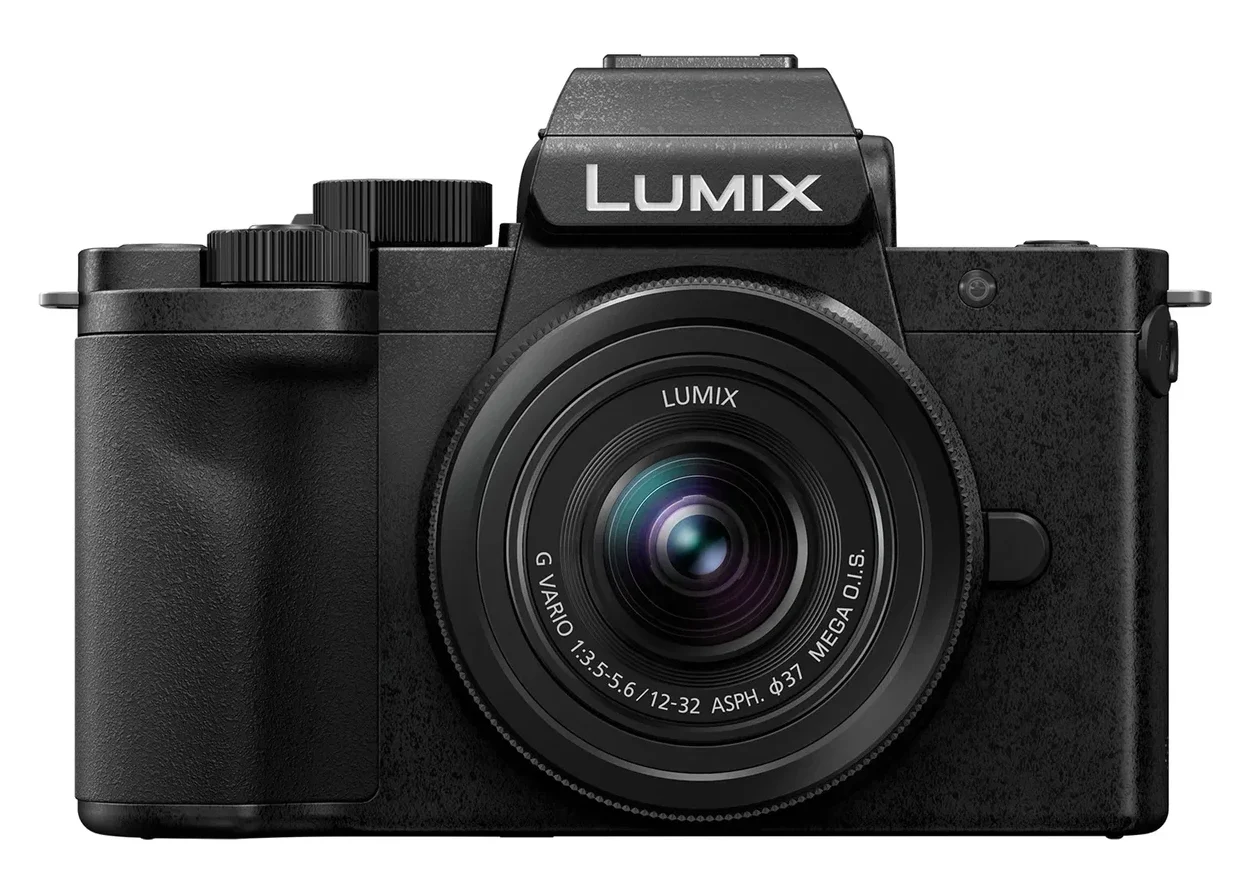
Best for photo and video: Panasonic Lumix G100D for beginners who want one camera for both.
Buying your first camera can get confusing fast.
One guide tells you to prioritize megapixels. Another says autofocus is everything. Then you discover sensor sizes, lens mounts, frame rates, and a dozen cameras that all claim to be perfect for beginners.
I've found that the best camera for a beginner depends less on having the longest spec sheet and more on what you actually want to photograph.
You don't need the most expensive camera to get started. I'd focus on finding one you'll actually carry, enjoy using, and won't immediately outgrow once you start learning.
In this guide, I've broken down my picks for the best cameras for beginners by use case, followed by what I'd actually consider before buying your first camera.
How I chose the best cameras for beginners
A beginner-friendly camera isn't necessarily the simplest camera available. If it's too limited, you may outgrow it quickly. If it's packed with controls and features you don't understand, you may spend more time navigating menus than taking photos.
When narrowing down these recommendations, I looked at five things.
1. Ease of use
Can you pick up the camera and start shooting without a painfully steep learning curve?
You shouldn't need to understand every setting on day one. But I'd want a camera that makes it easy to gradually move beyond automatic modes.
2. Room to grow
Can the camera support you when you want to experiment with manual exposure, different lenses, or RAW files?
A first camera doesn't need to be your forever camera, but I wouldn't recommend one that becomes limiting the moment your skills improve.
3. Size and portability
This matters more than it might seem when you're comparing cameras online. A technically brilliant camera isn't much use if it's so bulky or inconvenient that you leave it at home.
4. Autofocus
Reliable autofocus makes learning photography less frustrating, especially if you're photographing people, pets, sports, or anything else that refuses to stand still.
5. Overall value
I also wouldn't look at the camera body's price in isolation. Your setup may eventually include lenses, memory cards, batteries, storage, and editing tools.
What I considered | Why it matters for beginners |
|---|---|
Ease of use | Makes learning less frustrating |
Size | Affects how often you'll carry it |
Autofocus | Helps with moving subjects |
Lens options | Gives you room to explore |
Overall cost | Leaves budget for the rest of your setup |
The best cameras for beginners at a glance
Camera | Best for | Why I'd recommend it | Consider before buying |
|---|---|---|---|
Nikon Z50II | Best overall | Balanced, capable, and built to grow with you | Not the smallest option |
Canon EOS R50 | Best value | Lightweight and approachable | Fewer direct controls than advanced bodies |
Fujifilm X-M5 | Best compact | Small APS-C camera with interchangeable lenses | No electronic viewfinder |
Canon EOS R10 | Learning photography | More hands-on controls and strong autofocus | More camera than some casual beginners need |
Sony a6100 | Autofocus | Excellent subject tracking and broad lens ecosystem | Older interface |
Panasonic Lumix G100D | Photo + video | Compact hybrid camera | Smaller sensor than APS-C alternatives |
Best overall camera for beginners: Nikon Z50II
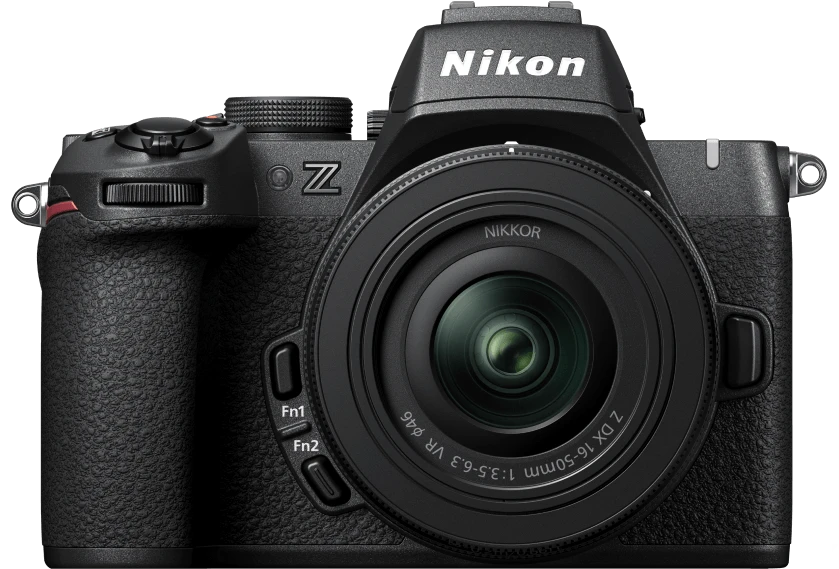
The Nikon Z50II is my pick for the best all-round camera for beginners.
It uses a 20.9MP APS-C sensor, Nikon's Z mount, and has a vari-angle touchscreen. Nikon has also equipped it with subject detection for multiple subject types and support for RAW capture.
Why I like it for beginners
What I like about the Z50II is its balance.
It doesn't feel like a camera you'll immediately outgrow, but you also don't need to understand everything it can do before taking your first photograph.
You can start with simpler shooting modes and gradually work your way into aperture priority, shutter priority, and manual exposure.
The Nikon Z mount also gives you room to explore different lenses as you figure out what kind of photography you enjoy.
I'd recommend it for
Travel photography
Portraits
Everyday photography
Family photography
Beginners who want to learn manual controls
What I'd consider before buying
The Z50II weighs approximately 495g with battery and memory card, so it isn't the lightest option here.
If your biggest priority is having a camera you can throw into a small bag and forget about, I'd look at something more compact.
My take: If you want one camera that can take you from complete beginner to a more confident photographer without feeling limiting, this is where I'd start.
Best value camera for beginners: Canon EOS R50
The Canon EOS R50 is one I'd recommend to beginners who want to get into interchangeable-lens photography without making the experience unnecessarily complicated.
It has a 24.2MP APS-C sensor, Canon's RF mount, Dual Pixel CMOS autofocus, and support for RAW and C-RAW files.
Why I like it for beginners
What makes the R50 appealing isn't the megapixel count.
It's that you can start simply.
The camera offers automatic modes for beginners who aren't ready to think about every exposure setting yet, while still giving you access to aperture priority, shutter priority, and manual shooting as you become more comfortable.
That makes it a useful bridge between taking pictures on your phone and taking more deliberate photographs with a dedicated camera.
I'd recommend it for
First-time camera buyers
Family photography
Travel
Portraits
Beginners moving from smartphones
What I'd consider before buying
The smaller, simpler body is part of the R50's appeal. But if you already know you enjoy working with manual controls, you may eventually prefer a camera with more dedicated buttons and dials.
My take: This is one of the easiest cameras I'd recommend for someone buying their first interchangeable-lens camera.

Best compact camera for beginners: Fujifilm X-M5
If there's one thing I'd encourage beginners to think seriously about, it's whether they'll actually carry their camera.
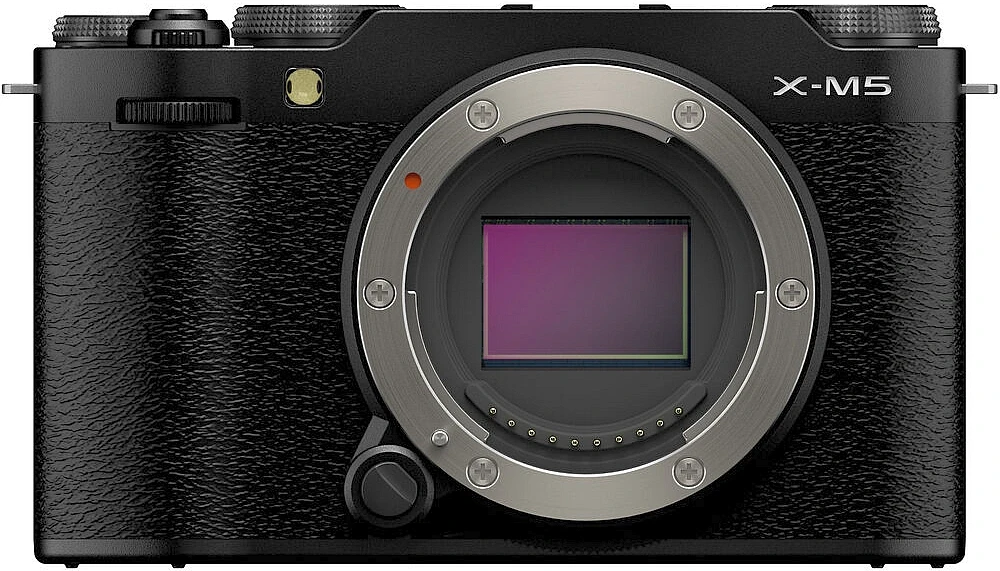
That's why the Fujifilm X-M5 stands out.
It combines a compact body with a 26.1MP APS-C X-Trans CMOS 4 sensor and support for RAW capture.
Why I like it for beginners
The X-M5 doesn't look or feel like an intimidating slab of professional equipment.
That matters.
A camera you're comfortable taking to dinner, on a walk, or on holiday is likely to teach you more than an expensive one sitting safely at home.
I also like Fujifilm's approach to colour and its Film Simulation modes because they give beginners a way to experiment with different visual looks straight out of the camera.
I'd recommend it for
Everyday photography
Travel
Street photography
Beginners who prioritize portability
Photographers who enjoy experimenting with colour
What I'd consider before buying
The X-M5 doesn't have an electronic viewfinder.
Personally, I'd recommend trying one before buying if you're unsure whether you'd prefer composing everything through the rear screen.
My take: A strong option if portability is high on your list and you don't want buying a dedicated camera to mean carrying a dedicated camera bag everywhere.
Best camera for learning photography: Canon EOS R10
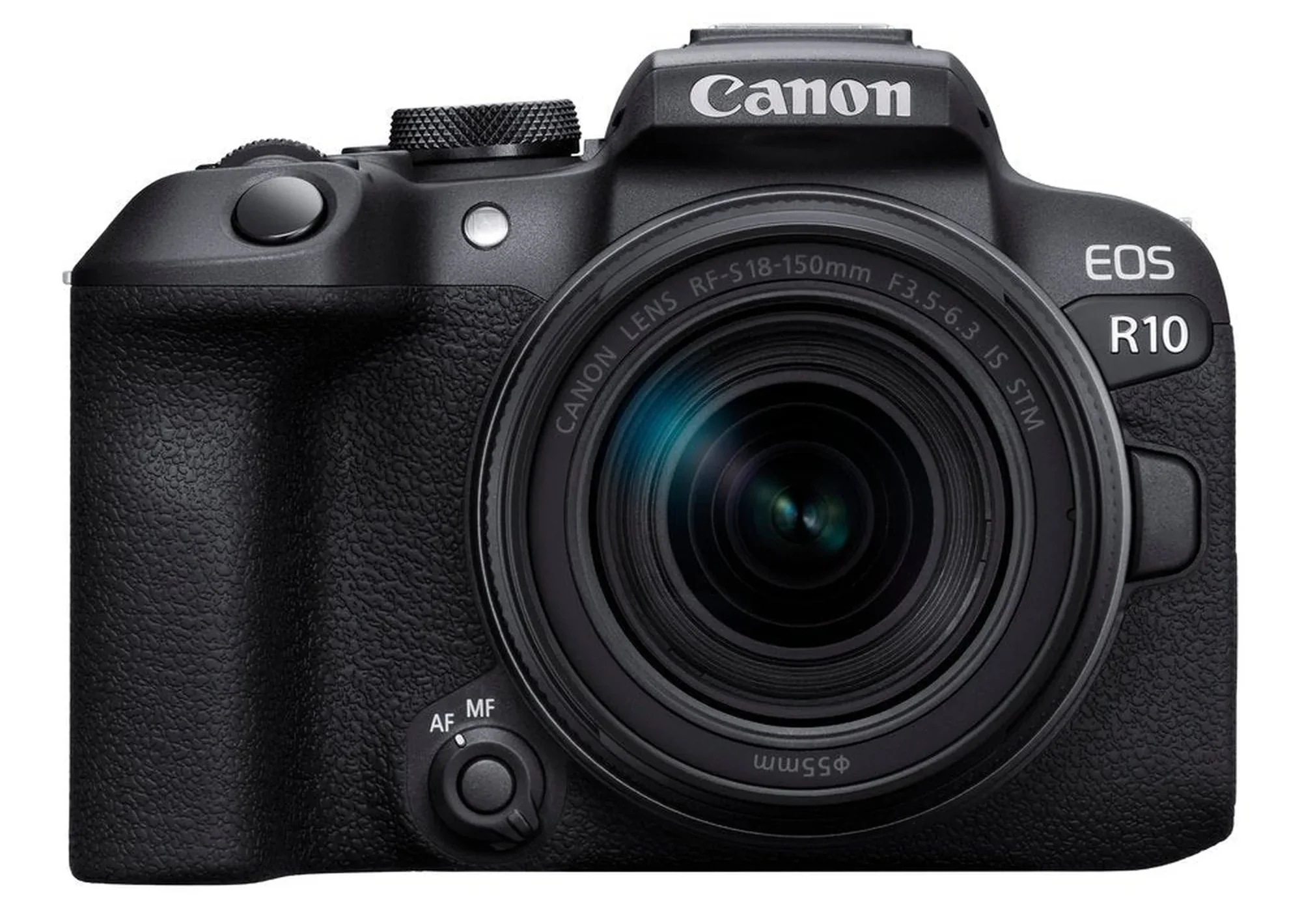
The Canon EOS R10 is the camera I'd consider for a beginner who already knows they want to take photography seriously.
It has a 24.2MP APS-C sensor, Canon's RF mount, and Dual Pixel CMOS autofocus.
Why I like it for learning
The R10 gives you more direct control than a very basic entry-level camera.
And while I don't think every beginner needs more buttons, I do think accessible controls become valuable when you're actively learning.
As you start experimenting with aperture, shutter speed, autofocus modes, and different shooting situations, having direct access to those controls can make the learning process less cumbersome.
I'd recommend it for
Beginners committed to learning photography
Action photography
Wildlife
Sports
Photographers who want more hands-on control
What I'd consider before buying
I'd question whether you need this much camera if you're primarily looking for something simple for holidays and everyday snapshots.
Buying more capability isn't always the same thing as buying a better camera for your needs.
My take: I'd choose the R10 if you're fairly sure photography is going to become more than an occasional hobby.
Best beginner camera for autofocus: Sony a6100
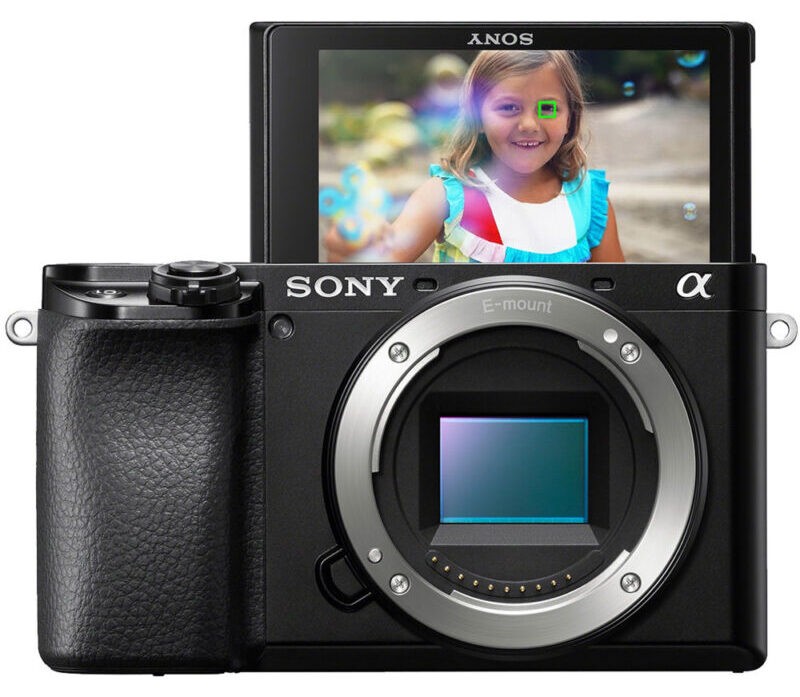
The Sony a6100 is an older camera, but I still think it's worth considering, particularly if photographing moving subjects is important to you.
It has a 24.2MP APS-C sensor, Sony's E mount, 425 phase-detection autofocus points, and support for 14-bit RAW capture.
Why I like it for beginners
Sony's autofocus technology is one of the biggest reasons I'd consider this camera.
If you're photographing children, pets, or fast-moving subjects, getting consistent focus can be one of the more frustrating challenges when you're starting out.
Reliable autofocus doesn't make you a better photographer, but it does remove one obstacle while you're learning everything else.
I'd recommend it for
Portraits
Family photography
Pets
Moving subjects
Beginners interested in Sony's E-mount system
What I'd consider before buying
The a6100 is older than several other cameras in this guide, and its interface can feel dated compared with newer options.
I wouldn't buy it purely because it has a strong reputation. I'd compare it with newer cameras in your price range first.
My take: Still a compelling option if autofocus and access to Sony's lens ecosystem matter most to you.
Best camera for beginners who shoot photos and video: Panasonic Lumix G100D
If you know you'll be taking both photographs and videos, I'd take a look at the Panasonic Lumix G100D.
It uses a 20.3MP Four Thirds sensor, has a Micro Four Thirds lens mount, supports RAW photography, and is a compact interchangeable-lens mirrorless camera.
Why I like it for beginners
I like the idea of a beginner not having to immediately buy separate gear for photography and video.
The G100D gives you an interchangeable-lens system in a relatively compact package, making it worth considering if you're interested in experimenting with both mediums.
I'd recommend it for
Beginners shooting photos and video
Travel
Content creation
Photographers who want a compact system
What I'd consider before buying
Its Four Thirds sensor is smaller than the APS-C sensors in several other cameras on this list.
That doesn't automatically make it a worse camera. But I'd understand the trade-offs of the system before choosing it.
My take: A practical choice if you want one compact camera that can support both photography and video from the beginning.
Mirrorless vs. DSLR vs. compact: which should beginners choose?
Before getting too attached to a particular camera, I'd first think about what type of camera actually suits you.
Mirrorless cameras
For many beginners, mirrorless cameras are where I'd start looking.
They can offer:
Interchangeable lenses
Compact bodies
Electronic viewfinders on many models
Modern autofocus systems
Strong photo and video capabilities
That doesn't mean mirrorless is automatically the right answer for everyone.
But if you want flexibility without committing to the size of a traditional DSLR, I think they're a sensible starting point.
DSLRs
DSLRs are no longer where most camera manufacturers are focusing their newest development. That said, I wouldn't dismiss them entirely.
A used DSLR can still be an affordable way to learn:
Aperture
Shutter speed
ISO
Lens selection
Manual photography
The used market can make older DSLRs particularly appealing if you're working with a tight budget. My main hesitation would be investing heavily in a system with less future development than today's mirrorless ecosystems.
Read more: Mirrorless vs. DSLR: Which is Better for Beginners?
Compact cameras
I'd consider a compact camera if convenience is your priority.
They make sense if:
You don't want to change lenses
You want something easy to carry
You prefer simplicity
You don't want to build a large camera kit
The trade-off is flexibility.
With an interchangeable-lens camera, you can adapt your setup as your interests change. With a compact camera, you're generally working with the capabilities of the built-in lens.
What actually matters when choosing your first camera
Specs can be useful. I just don't think they all deserve equal attention.
1. Don't obsess over megapixels
Megapixels affect image resolution, but I wouldn't make them the deciding factor for most beginners. Higher resolution can give you more room for cropping and printing large images. But it won't improve your composition, lighting, focus, or timing. I'd look at resolution in context rather than treating megapixels as a scorecard.
2. Understand sensor size, but don't obsess over it
Sensor size affects things like field of view, depth of field, and low-light performance. But I wouldn't tell a beginner they need a full-frame camera. APS-C and Micro Four Thirds cameras are capable of producing excellent images while often keeping bodies and lenses smaller.
Instead of asking, Which sensor is best?, I'd ask: Which system makes the most sense for what I want to photograph?
3. Prioritize autofocus if your subjects move
Autofocus becomes more important if you photograph children, pets, sports, and wildlife. If you primarily shoot landscapes or architecture, I'd put more thought into other factors, such as lens selection and how the camera handles.
4. Don't underestimate ergonomics
You can spend weeks comparing cameras online and still learn more by holding your finalists in person.
I'd pay attention to:
The grip
Button placement
Menu navigation
Screen visibility
Weight with a lens attached
A camera doesn't need to feel expensive in your hands. But I'd want it to feel comfortable enough that I actually want to use it.
5. Think about lenses, not just the camera body
Your lens can have as much influence on what you can photograph as the camera body itself. And no, I don't think you need five lenses when you're starting.
For most beginners, I'd start with the kit lens. Use it. Learn what you enjoy photographing. Notice where it feels limiting. Then let that experience guide your next lens purchase.
If you fall in love with portraits, you may eventually want a fast prime. If wildlife becomes your thing, you may need more reach. If you travel constantly, you might prioritize a smaller zoom.
Your first lens doesn't need to solve every photographic problem you'll ever have.
Read more: Photography Kit: The Complete Guide Beginners Need to Build Their First Photography Kit
How much should a beginner spend on a camera?
I don't think there's a universal answer here.
What I'd try to avoid are two opposite mistakes: buying something so cheap that it becomes frustrating to use, or spending far more than you need because you think you'll eventually "grow into" the camera.
1. If you're on a tighter budget
I'd look at:
Entry-level cameras
Older models
Used cameras
Camera and kit lens bundles
You will make compromises. That's okay. But also remember that you don't need the newest camera to learn photography.
2. If you have a mid-range budget
This is where I'd look for the balance between beginner-friendly usability and features you'll continue using as you improve. You may gain:
Better autofocus
More direct controls
Newer processing
Greater flexibility within a lens system
3. If you have a larger budget
I'd only spend significantly more if you already understand why you need the additional capability. For example:
Fast action photography
Wildlife
Demanding video work
Specific low-light needs
I wouldn't spend extra simply for the comfort of knowing the camera is "future-proof." You may discover six months later that your interests don't require half the features you paid for.
Remember the real cost of starting photography
I'd also leave room in your budget for:
A lens
Memory cards
An extra battery
Storage
A camera bag
Editing tools
Don't spend your entire budget on the camera body and then realize you've forgotten everything else.
Should beginners buy a new or used camera?
I think both can make sense. If you're buying new, I'd lean toward buying new if you value a manufacturer's warranty, known condition, current features, and less uncertainty.
But if you're buying used, I'd consider used equipment if getting more value for your money is important. You may be able to afford a better lens, a higher-tier older camera, and a more complete setup.
But I'd be careful about where I buy. Things I'd check include:
Physical condition
Sensor condition
Lens mount
Buttons and dials
Battery health
Seller reputation
If you're buying your first camera and don't know what to inspect, I'd feel more comfortable buying from a reputable used-equipment retailer than an anonymous marketplace listing.
Your first camera is only the beginning
Buying a camera solves one part of photography: capturing the image. Then you have to figure out what happens next. You'll eventually need to learn how to:
Import your photographs
Organize your files
Identify your strongest images
Edit RAW files
Store your work
This is something I think camera buying guides often overlook. Choosing a camera is only the beginning of the workflow.
Shoot → Import → Cull → Edit → Share
And that workflow doesn't need to become complicated just because your camera is capable.
Once you're shooting more regularly, tools like Photon can help simplify parts of the post-production process, particularly when you're working through a larger set of images. The goal isn't to automate your creative decisions. It's to spend less time on repetitive parts of the workflow and more time understanding your photographs.
What I'd learn after buying your first camera
I wouldn't wait until you have the perfect setup to start learning.
1. Exposure
Start with the relationship between:
Aperture
Shutter speed
ISO
You don't need to shoot everything manually. But understanding what these settings do gives you more creative control when you need it.
2. Composition
A better camera won't tell you where to stand. So I'd start paying attention to:
Framing
Backgrounds
Light
Distance
Perspective
Try photographing the same subject from three different positions. You'll learn a surprising amount from seeing how much perspective changes an image.
3. RAW vs. JPEG
JPEG files are processed in-camera and ready to use. RAW files retain more image data and give you greater flexibility during editing, but they require processing. I wouldn't treat one format as morally superior to the other. I'd simply experiment.
Try both and see what makes sense for the way you work.
4. Culling
Taking photographs is only one part of photography. Learning to recognize your strongest images matters too. When I'm reviewing photographs, I'd ask:
Is the subject clear?
Does the composition work?
Is there something interesting about the moment?
Would I make this photograph again?
The ability to choose your strongest work is a skill worth developing early.
5. Editing
I'd start with the basics:
Exposure
White balance
Contrast
Cropping
Colour
You don't need to develop a dramatic editing style immediately. First, understand what each adjustment does. Then you can begin making more intentional creative decisions.
Editing can often start feeling complicated due to the tools that have multiple sliders and don't guide you on what to edit and why. Photon by Aftershoot is built to help you build confidence on what a good edit looks like and teaches you editing as you go.
Common mistakes I see beginners make when buying a camera
1. Buying based on megapixels alone
Resolution is one part of the equation, not the whole thing.
2. Spending the entire budget on the camera body
I'd always think about the complete setup.
3. Buying a camera that's too complicated
More features don't necessarily make learning easier.
4. Ignoring size and portability
I'd consider how a camera feels with a lens attached, not just how it looks in a product image.
5. Buying gear for photography you don't actually do
I wouldn't buy a wildlife-focused setup because wildlife photography sounds exciting if I mostly take photographs of friends, travel, and everyday life.
I'd let my actual interests guide my gear choices.
6. Assuming a better camera automatically produces better photographs
A better camera gives you more possibilities. It doesn't replace learning how to see.
The bottom line
I don't think your first camera needs to be your forever camera. It just needs to get you started. I'd choose something that fits what you genuinely want to photograph, feels comfortable enough to carry, and gives you room to learn. Then, at some point, I'd stop comparing cameras and start taking pictures.
Because eventually, the question stops being: Which camera should I buy? And becomes: What do I want to photograph next?
FAQs about the best cameras for beginners
1. What is the best camera for a complete beginner?
The best camera for a complete beginner is one that is easy to use, has reliable autofocus, and gives you room to learn. In most cases, a compact mirrorless camera is the safest choice.
2. Is a mirrorless better than a DSLR for beginners?
For most beginners in 2026, yes. Mirrorless cameras are usually smaller, simpler to preview, and more future-friendly for lens support.
3. Do I need an expensive camera to get good photos?
No. A good beginner camera with a solid lens is more than enough to learn photography and create strong images.
4. What lens should a beginner buy first?
A standard zoom or a simple prime lens is usually the best place to start. The right lens depends on whether you shoot portraits, travel, or everyday scenes.
5. Is a beginner camera good enough for photos and video?
Yes, many beginner cameras are good enough for both. The key is choosing one that handles autofocus, stabilization, and menus well in the type of shooting you actually plan to do.
Made for photographers learning in public.