Gear and Camera Guides
Photography Kit: The Complete Guide Beginners Need to Build Their First Photography Kit

Vasundhara Mukherjee
TL;DR
Start with the essentials: a camera body, kit lens, memory cards, spare battery, and camera bag.
A kit lens is enough for most beginners. Learn what it can do before investing in additional lenses.
A tripod, cleaning kit, editing software, and external storage become useful as your photography workflow develops.
Specialist gear can wait. Flash, filters, macro lenses, remote shutters, and other accessories make sense when a specific type of photography gives you a reason to buy them.
Your photography kit includes what happens after you press the shutter: editing, storage, and backups are part of the workflow too.
Buy used if it helps you get started within your budget. A good used camera can be an excellent way to learn photography.
Build your photography kit gradually. Buy something when your photography needs it, not because you've seen it recommended online.
What Is a Photography Kit?
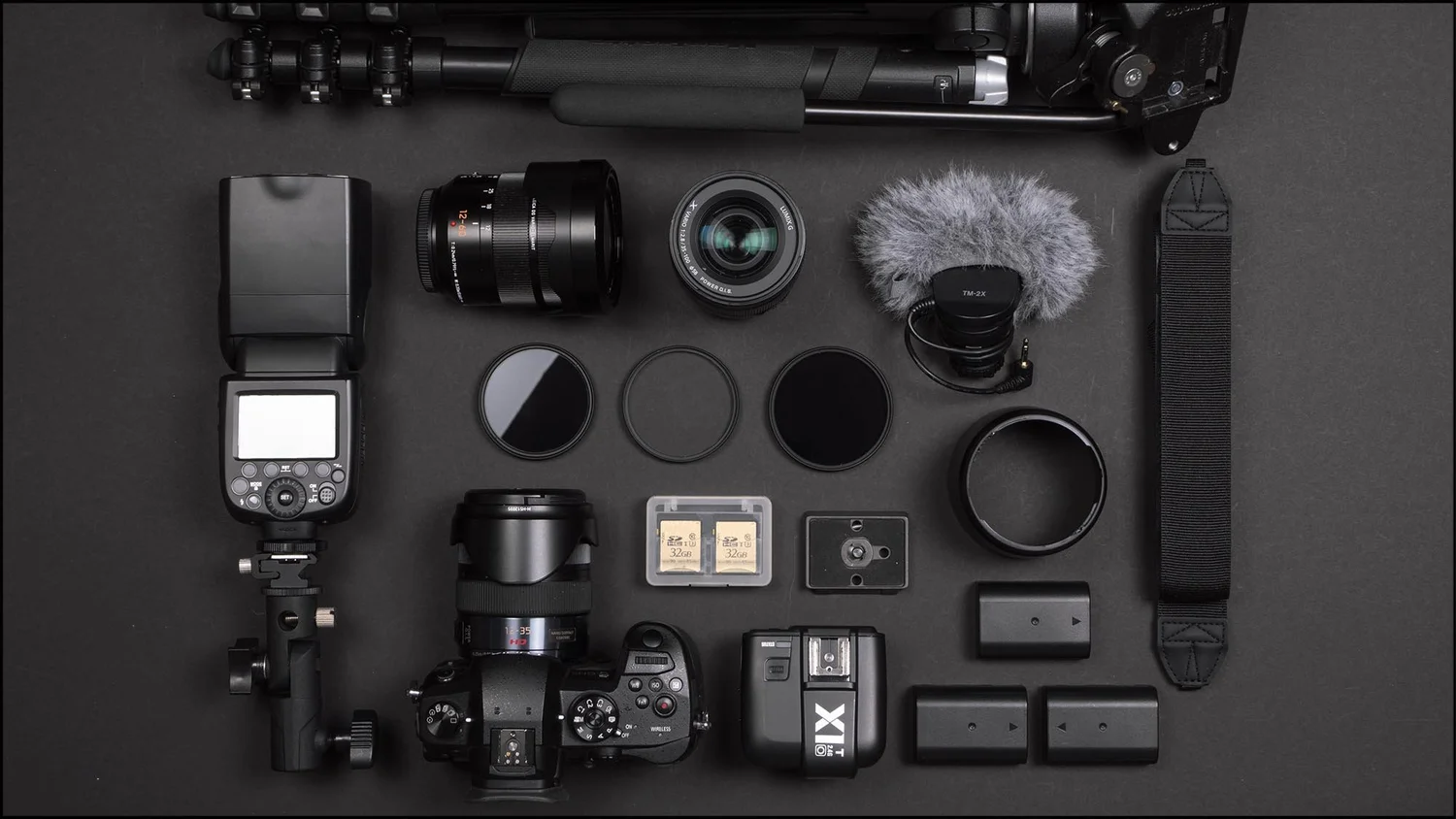
When most people hear the words photography kit, they picture a camera bag packed with lenses, batteries, tripods, filters, and enough accessories to open a small camera shop. You don't need all of that.
A photography kit is simply the set of tools that helps you move through your photography workflow: Capture → Organize → Edit → Share
Most beginners spend weeks researching cameras and lenses but almost no time thinking about what happens after they press the shutter. That's where your photography workflow really begins.
The goal isn't to build the biggest kit you can afford. It's to build a kit that supports the kind of photography you actually want to do.
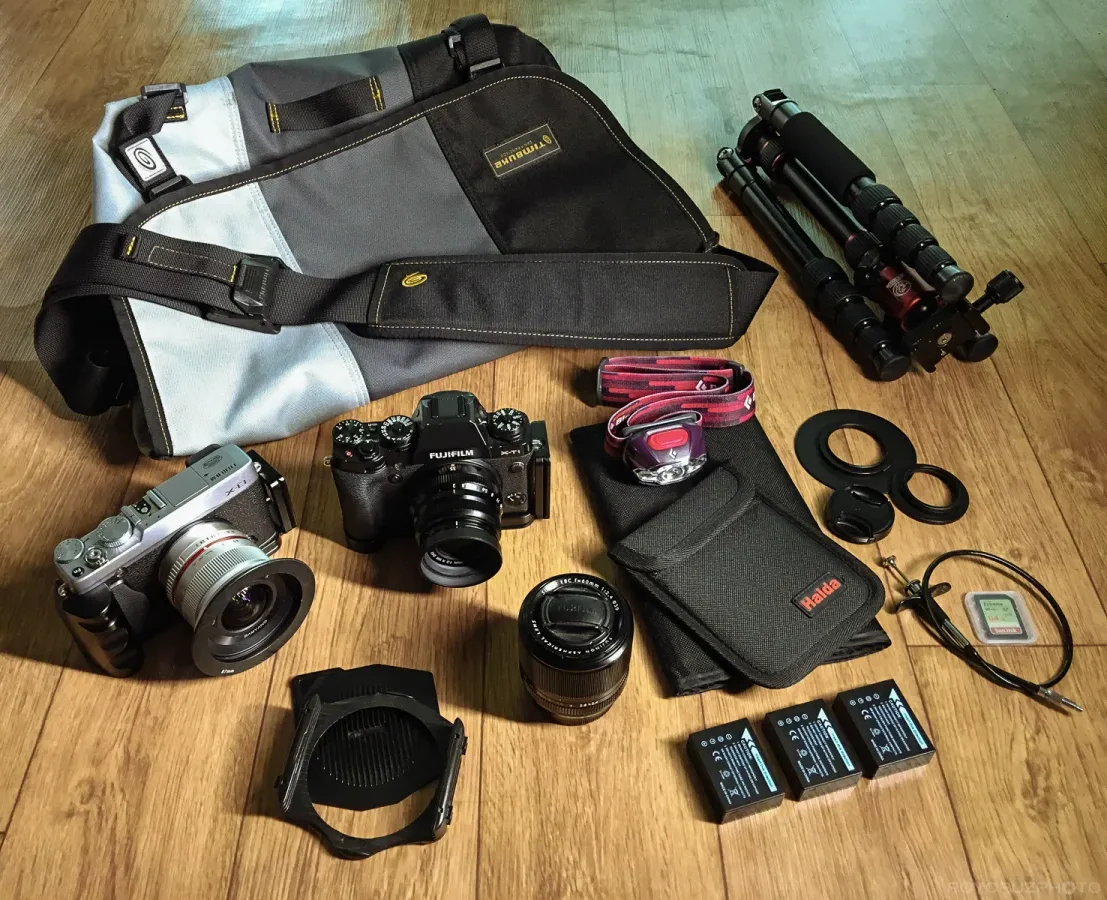
What Do You Need in a Beginner Photography Kit?
If you're buying your first camera, you can start with surprisingly little.
Essential | Buy now? | Why it matters |
|---|---|---|
Camera body | Yes | The foundation of your kit |
Kit lens | Yes | Covers most beginner photography |
Memory cards | Yes | Stores your photographs |
Spare battery | Yes | Helps prevent interrupted shoots |
Camera bag | Yes | Protects and carries your equipment |
Tripod | Depends | Useful for specific types of photography |
Cleaning kit | Later | Helps maintain your equipment |
Editing software | Later | Helps you get more from your photographs |
External SSD | Later | Helps store and protect your growing library |
Flash | Later | Useful for portraits and events |
Filters | Later | Useful for specific photography styles |
Remote shutter release | Later | Useful for long exposures and self-portraits |
You don't need to buy everything on this list before you take your first photograph. In fact, I'd recommend the opposite.
Start with the camera, lens, memory card, spare battery, and something to carry it in. Then let your photography tell you what you need next.
Pro tip: If you're deciding between buying another accessory or spending a weekend shooting, choose the weekend. Experience compounds faster than equipment.
How Do You Choose the Right Camera?
Your camera is the foundation of your photography kit, but it doesn't need to be the most expensive thing you own.
Almost every modern interchangeable-lens camera is capable of producing excellent photographs. The difference between a beginner and a more experienced photographer rarely comes down to megapixels. Understanding light, composition, timing, and how to use the camera will take you much further.
Choose a camera that feels comfortable in your hands and fits your budget. Everything else comes later.
1. Should You Buy a DSLR or Mirrorless Camera?
For most beginners buying a new camera today, I'd lean toward mirrorless. Mirrorless cameras offer features that can make the learning process easier, including:
Exposure previews
Modern autofocus systems
Smaller bodies in many cases
Strong video capabilities
Newer camera systems from manufacturers
A DSLR can still be an excellent choice, particularly if you're buying used on a tight budget or specifically prefer an optical viewfinder. Neither system prevents you from becoming a good photographer. The bigger difference is the experience of using the camera.
Also read: Mirrorless vs. DSLR Cameras: Which Is Better For Beginners?
2. Should You Buy a Used Camera?
Yes. Buying used can be one of the smartest ways to stretch your photography budget. When you're looking at a used camera, pay attention to:
Shutter count
Cosmetic condition
Return policy
Included accessories
The reputation of the seller
You don't need the newest camera to learn photography. Plenty of photographers build their skills on older equipment before eventually upgrading.
One thing worth remembering: camera bodies tend to become outdated faster than lenses. A good lens can stay useful for many years.
Is the Kit Lens Good Enough?
Absolutely. Kit lenses get an unfair reputation. A lot of beginners assume they need an expensive prime lens before they can take beautiful photographs. In reality, your kit lens can teach you some of the most important fundamentals of photography.
You'll learn about:
Composition
Framing
Focal lengths
Perspective
Zooming
Working with available light
Those lessons matter far more when you're starting out than owning a lens with an exceptionally wide aperture.
When Should You Buy Another Lens?
The answer is simple: When your current lens prevents you from making the photographs you want.
For example:
Photography style | Lens to consider |
|---|---|
Portraits | 50mm prime |
Wildlife | Telephoto lens |
Landscapes | Wide-angle lens |
Macro | Macro lens |
Buy a lens because you've discovered a limitation in your current setup. If you keep wishing you could get closer to wildlife, you probably need more reach. If you want more background separation in portraits, a fast prime might make sense.
Your photography should create the reason for the purchase.
Common mistake to avoide: Buying three lenses before you've learned everything your kit lens can do.
What Memory Card Do You Need?
Memory cards are one of the least exciting parts of your photography kit, right up until one fails.
For beginners, carrying two cards can be a sensible approach. If one card becomes corrupted or gets lost, you haven't automatically lost your entire day's shoot.
When choosing a memory card, look for:
Enough capacity for the type of shooting you do
A write speed appropriate for your camera
A reputable manufacturer
A card that's compatible with your camera
You don't necessarily need the biggest card available. You need one that's reliable and appropriate for your camera and shooting habits.
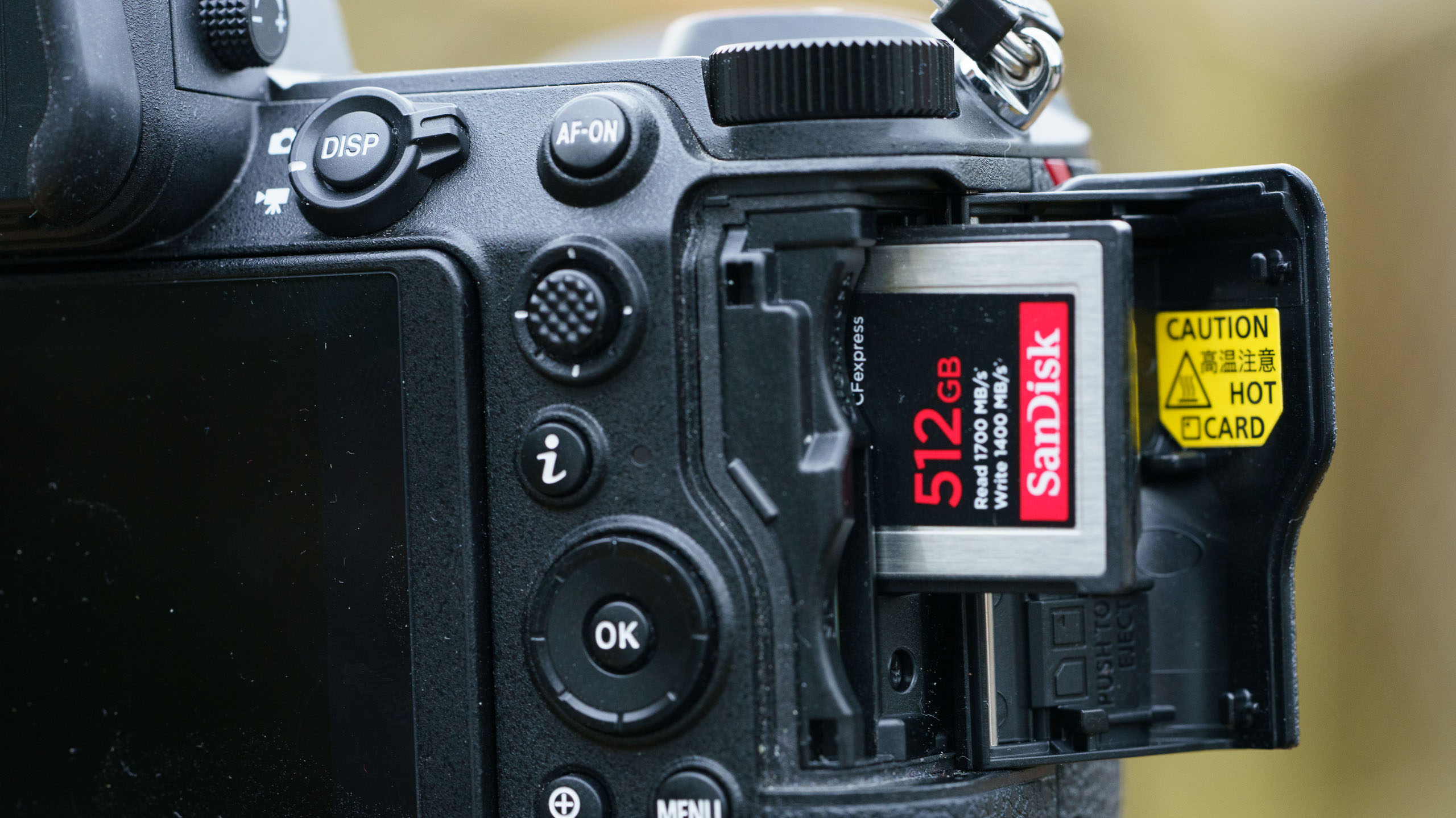
How Many Memory Cards Should You Carry?
At least two is a good starting point. Memory cards are small, easy to misplace, and relatively inexpensive compared with the photographs stored on them. Having a backup card in your bag is an easy bit of insurance.
Do You Need a Spare Battery?
A spare battery is one of the simplest additions to your kit and can save you from ending a shoot earlier than planned.
Keep it charged and keep it in your camera bag. If you're using a mirrorless camera, battery life can be an especially important consideration because the electronic viewfinder and screen consume power.
Pro tip: Charge your batteries the night before you plan to shoot. Make it part of your routine rather than something you remember when you're already walking out the door.
What Makes a Good Camera Bag?
A camera bag protects your gear and makes it easier to actually bring your camera with you. A good camera bag is the one you'll happily carry for hours.
Look for:
Padded compartments
Adjustable dividers
Weather-resistant materials
Comfortable straps
Enough room for the equipment you actually use
Don't buy a bag that's so small that adding one lens turns it into a game of photographic Tetris. At the same time, you don't need a giant backpack if you're carrying one camera and one lens.
Backpack or Shoulder Bag?
Backpack | Shoulder bag |
|---|---|
Better for travel | Faster access |
Comfortable for long days | More compact |
Holds more gear | Easier in some urban settings |
Neither is objectively better. Choose the one that fits how you photograph.
Do Beginners Really Need a Tripod?
Not necessarily. If you mostly photograph handheld during the day, you may go weeks or months without needing one. But there are certain situations where a tripod becomes extremely useful.
They're particularly helpful for:
Landscapes
Night photography
Waterfalls
Long exposures
Fireworks
Self-portraits
Group photographs
The important thing isn't buying the lightest tripod you can find. Stability matters. A tripod that's too flimsy to keep your camera steady isn't much of a tripod.
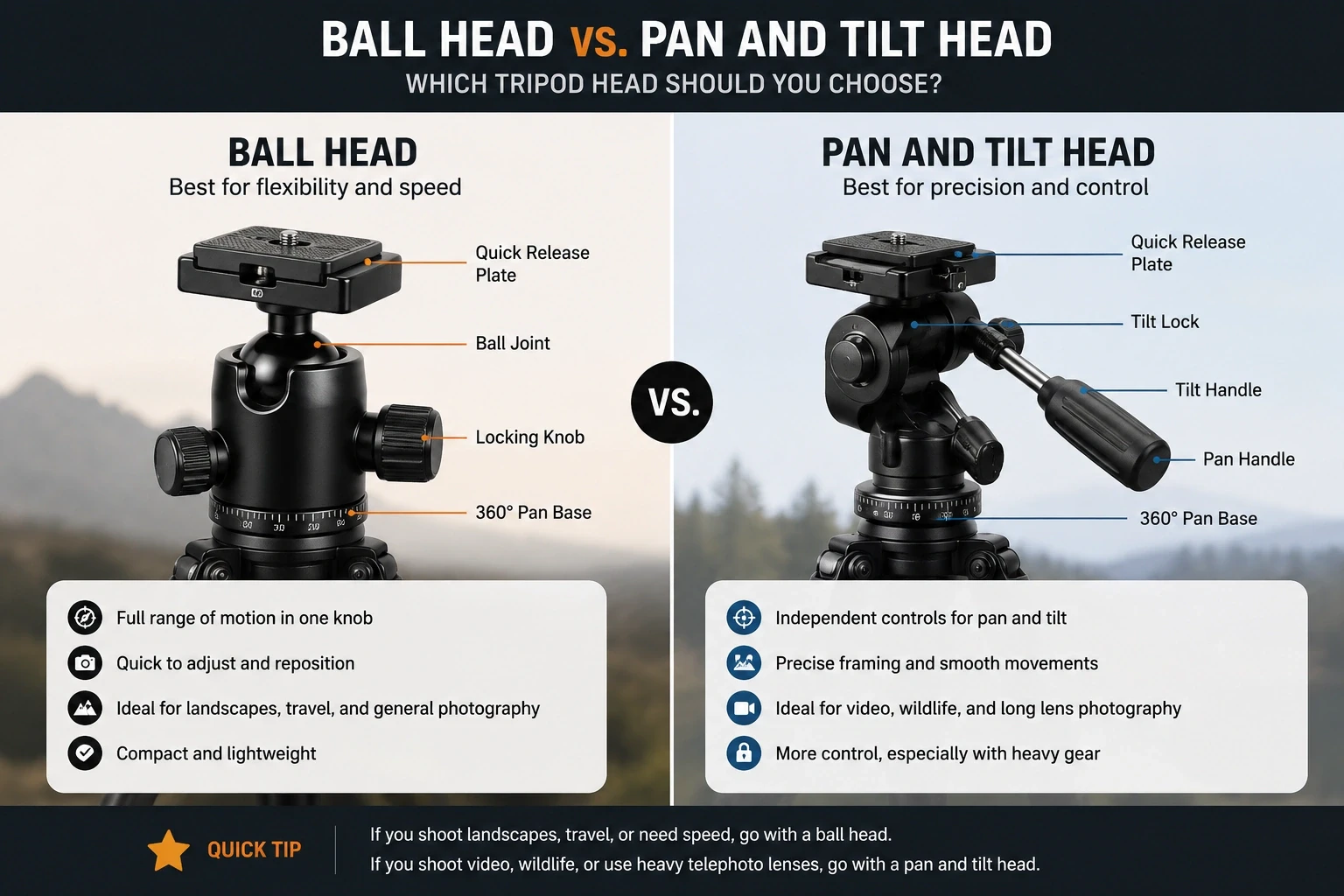
Ball Head or Pan-and-Tilt?
For most beginners, a ball head is the simpler option.
1. Ball head
Quick to adjust
Compact
Easy to learn
2. Pan-and-tilt head
More precise
Useful for architecture
Popular with some landscape photographers
If this is your first tripod, a ball head is usually a straightforward place to start.
How Do You Maintain Your Photography Gear?
You don't need an elaborate maintenance routine. For basic cleaning, a few simple tools are useful:
Microfiber cloth
Air blower
Lens cleaning solution
Avoid using tissues, clothing, or paper towels on your lenses. They can potentially damage lens coatings over time.
Clean your lens when it needs cleaning, and be more cautious about cleaning the camera sensor. Sensor cleaning should be done only when necessary and with the appropriate tools.
The goal isn't to obsess over your equipment. It's simply to keep it clean, protected, and ready to use.
What Happens After You Take the Photograph?
Your photography kit doesn't end when you press the shutter.
If you're shooting RAW, you'll need to think about what happens to those files afterwards.
Modern cameras capture a huge amount of information, but a RAW file isn't necessarily supposed to look finished straight out of the camera. It's designed to give you flexibility during editing. That's why editing is part of the photography process rather than an optional extra.
For beginners, however, opening professional editing software for the first time can be intimidating. Dozens of sliders, panels, curves, masks, and unfamiliar terminology can make the process feel much more complicated than taking the photograph itself.
That's the gap Photon by Aftershoot is designed to address.
Photon is built to help beginners and hobbyists understand editing through guided assistance. Its Smart Coach explains edits as you work, turning the editing process into part of the learning experience rather than something you have to figure out alone. The goal isn't to replace your creative decisions. It's to help you understand them.
How Should You Store and Back Up Your Photos?
This is the part of a photography kit that is very easy to ignore until something goes wrong. A simple backup workflow can go a long way because memory cards can fail, hard drives can stop working and laptops can be lost or stolen: Camera → Computer → External SSD → Cloud Backup
An external SSD can be a useful part of a growing photography workflow because it's compact, fast, and easy to take with you.
As your library grows, organisation matters too. Create a folder structure from the beginning. For example: 2026 → July → New York Trip
It takes a few seconds to organise photographs when you import them. Finding something three years later is considerably easier when you know where you put it.
Which Photography Accessories Can Wait?
There is always another accessory that promises to make your photographs better. A lot of them can wait.
Accessory | Useful for | Buy now? |
|---|---|---|
External flash | Portraits and events | Later |
Polarizing filter | Landscapes | Later |
ND filter | Long exposures | Later |
Macro lens | Close-up photography | Later |
Remote shutter release | Night photography | Later |
Reflector | Portraits | Later |
Camera cage | Video | Skip for now |
The rule is simple: Don't buy an accessory because it's popular. Buy it because it solves a problem you're actually experiencing.
What Photography Gear Do You Need for Different Types of Photography?
Your kit can change considerably depending on what you photograph.
You don't need to buy specialist equipment immediately. But knowing what you might eventually need can help you choose a camera system and avoid unnecessary purchases.
Photography style | Gear to consider |
|---|---|
Portraits | Fast prime lens, eventually a flash or reflector |
Wildlife | Telephoto lens |
Landscapes | Wide-angle lens, tripod, potentially filters |
Macro | Macro lens |
Travel | Versatile lens and comfortable camera bag |
Night photography | Tripod and remote shutter release |
Events | Spare batteries, memory cards and potentially a flash |
Video | Camera cage and other video accessories, once you know you need them |
The important thing is that your photography style should determine your kit, not the other way around. You don't need a wildlife lens because you might photograph wildlife someday. Buy it when wildlife becomes the thing you're actually photographing.
How Much Should a Beginner Photography Kit Cost?
Your budget should determine how quickly you build your kit, not whether you can start photography at all.
Budget | What you can expect |
|---|---|
Under $800 | Entry-level camera, kit lens, memory cards, spare battery |
$800 to $1,500 | Better camera, tripod, camera bag, editing software, SSD |
$1,500+ | Additional lenses, flash, premium tripod and specialist accessories |
These aren't rules. They're simply a way to think about where your money is going. And remember: a bigger budget doesn't automatically make someone a better photographer.
Understanding light, composition, timing, and editing will have a much greater impact on your work than adding another piece of equipment to your bag.
How Should You Build Your Photography Kit?
Instead of trying to build your dream photography kit overnight, build it in stages.
Stage 1: Start Shooting
Buy:
Camera body
Kit lens
Memory cards
Spare battery
Camera bag
Stage 2: Improve Your Workflow
Once you're comfortable with your camera, start improving everything that happens around the photograph.
Consider adding:
Tripod
Cleaning kit
Editing software
External SSD
Backup system
These purchases can improve the reliability of your workflow without simply adding more equipment to your camera bag.
Stage 3: Buy for Your Photography Style
Only now should you start investing in specialist equipment.
If you've started photographing portraits regularly, a fast prime lens might make sense.
If you're spending your weekends photographing wildlife, a telephoto lens is probably a better investment.
If landscapes are what you love, a sturdy tripod or filters may become useful.
Your photography should tell you what to buy next.
The BUILD Framework
If you want a simple rule to remember all of this, use BUILD:
Begin with the essentials.
Understand your camera before upgrading.
Improve through editing.
Learn by shooting consistently.
Develop your kit only when your photography demands it.
Whenever you're tempted by a shiny new accessory, come back to BUILD.
The goal isn't to stop yourself from ever buying new equipment. It's to make sure every purchase has a reason behind it.
Common Mistakes Beginners Make
Every photographer makes mistakes. The goal isn't to avoid all of them. It's to avoid the expensive ones.
1. Buying Too Much Gear Too Soon
It's tempting to believe every new accessory will improve your photography. Usually, it won't. Start with one camera and one lens. Learn what they're capable of before expanding your kit.
2. Ignoring Editing
Photography doesn't end when you press the shutter. If you're shooting RAW, editing is part of the creative process. Learning the basics of editing can have a meaningful impact on your photographs. Don't spend weeks researching cameras and then treat editing as an afterthought.
3. Comparing Yourself to Professionals
Social media has a strange way of making someone else's decade of experience look like a collection of photographs you should be able to reproduce immediately. Don't compare your first month with someone else's career. Compare today's photographs with the ones you took six months ago. That's a much more useful measurement of progress.
4. Chasing Better Equipment Instead of Better Habits
Before buying another lens, ask yourself:
Do I understand exposure?
Can I compose confidently?
Have I explored everything my current equipment can do?
If the answer is no, your next upgrade might not need to be a purchase.
5. Forgetting to Back Up Your Photos
A backup isn't glamorous. Neither is discovering that your only copy of an important shoot has disappeared. Build a backup habit before you have a large enough library to regret not having one.
The Bottom Line
A great photography kit isn't measured by how much equipment you own. It's measured by how often it gets you out taking photographs.
Start with a camera, a kit lens, enough storage, a spare battery, and a way to carry everything safely. Learn your camera. Get comfortable with your lens. Learn how to edit your photographs. Back up your work. Then, when you discover something your current kit can't do, upgrade with purpose.
The best photography kits aren't built overnight. They're built around the photographer using them.
FAQs About a Photography Kit
1. What is the best photography starter kit for beginners?
The best photography starter kit for beginners is a camera body, versatile kit lens, memory card, spare battery, and camera bag. Start with these essentials and learn how to use them before buying more gear. As your workflow develops, you can add a tripod, cleaning kit, editing software, and external storage. The best kit is one built around what you actually photograph, rather than a collection of accessories you may never use.
2. Do I need expensive gear to become a good photographer?
No. Photography is a skill. Understanding light, composition and storytelling will always matter more than owning the latest equipment.
3. Should I buy a camera bundle?
Sometimes. Bundles that include useful items like memory cards, batteries or camera bags can save money. Be cautious of bundles filled with inexpensive accessories you'll rarely use.
4. When should I upgrade my photography kit?
Upgrade when your current equipment prevents you from making the photographs you want and you have a genuine purpose for upgrading it.
5. What's the most important item in a beginner photography kit?
The camera gets all the attention, but the most important part of your kit is the one that keeps you photographing consistently. A reliable camera, a versatile kit lens, and a workflow that includes editing and backups will take you much further than owning lots of expensive accessories.
Made for photographers learning in public.